Waterloo Kitchener Cambridge Stratford Brantford Guelph & Surrounding Areas
Why Wasps Are a Serious Risk Around Your Home
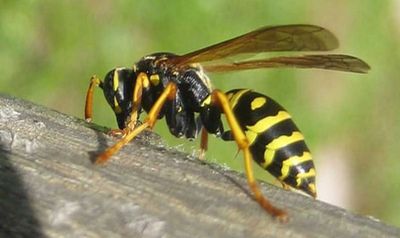
Most stinging insects will leave people alone if unprovoked. Wasps are a different matter, particularly as summer progresses and colonies reach their peak population.
They are aggressive near the nest
Wasps defend the area around their nest vigorously. Activities as routine as mowing the lawn, trimming hedges, or opening a shed door near an established nest can trigger a sting response.
They can sting repeatedly
Unlike honey bees, which can only sting once, wasps can sting multiple times. A disturbed colony near your home puts everyone nearby at risk, not just the person who got too close.
Nests grow fast and become harder to treat
A wasp queen starts a nest alone in spring with just a handful of cells. By late summer, a yellowjacket colony can contain several thousand workers. The larger the colony, the more involved and dangerous the treatment becomes without professional equipment.
Stings are a medical emergency for some people
For individuals with a venom allergy, a single wasp sting can trigger anaphylaxis, a life-threatening reaction requiring immediate emergency care. Even people who have never had a severe reaction can develop one, as sensitivity can change with repeated exposure.
Nests appear in places you do not expect
Eave and soffit nests are visible and easy to spot. But wasps also build inside wall voids, in attic spaces, underground, inside gas barbecue grills, inside children's play equipment, and inside outdoor furniture. Concealed nests are particularly hazardous because they are encountered suddenly and at close range.
Common Wasp Species in Kitchener & Waterloo
Yellowjacket Wasp

The most commonly encountered and most defensively aggressive wasp species in Waterloo Region. Yellowjackets are small, about 12 to 16mm, with the classic yellow and black banded colouring most people associate with wasps. They are scavengers as well as predators and are the species most likely to be found hovering around outdoor food, garbage, and sugary drinks in late summer.
Paper Wasp
Slender, brownish wasps with long legs that hang visibly when flying. Paper wasps build the open, umbrella-shaped nests commonly found under eaves, window ledges, deck railings, and porch ceilings. Colonies are smaller than yellowjacket colonies, typically ranging from a few dozen to a few hundred workers, and paper wasps are generally less aggressive than yellowjackets when not directly disturbed.
Mud Dauber Wasp
Mud Dauber Wasp
A solitary wasp that builds the distinctive tubular mud nests found on exterior walls, inside garages, and on outbuildings. Mud daubers are generally non-aggressive and rarely sting unless directly handled. They do not build a social colony, so there is no large defensive worker population to contend with. While not a significant stinging risk, their mud nests are unsightly and old nests can occasionally be taken over by yellowjackets if left in place.
Why DIY Wasp Treatment Can Make Things Worse
Hardware store wasp sprays can handle a small, newly established nest in an accessible location, treated carefully at night when activity is low. Outside of that narrow scenario, DIY treatment creates real risk.
Ground nests. Yellowjacket ground nests can contain thousands of workers and the entry point is often a small hole that gives no indication of the colony size below. Treating a ground nest incorrectly can trigger a mass emergence from multiple exit points simultaneously.
Concealed nests. A nest inside a wall void cannot be effectively treated from the outside with a retail spray. Attempting to do so often traps workers inside the wall, forcing them to chew through into the interior living space as they look for an exit.
Large surface nests. A well-established yellowjacket nest in late summer houses hundreds to thousands of workers. Approaching it without proper protective equipment is not something a store-bought aerosol makes safe.
Nests near anyone with a venom allergy. If anyone in your household has a known or suspected venom allergy, professional treatment is not optional. A partially failed DIY attempt that agitates the colony near that person is not a risk worth taking.
.jpeg/:/rs=w:400,cg:true,m)
Wasp Season in Kitchener & Waterloo: What to Expect
Spring (April to June): Mated queens emerge from overwintering sites and begin building new nests. Colonies are small and easy to treat at this stage. If you spot a nest being built, early intervention is significantly easier, safer, and less disruptive than waiting until summer.
Summer (July to August): Colonies grow rapidly and worker populations expand. Yellowjackets become increasingly present around outdoor food and garbage as foraging intensifies. Nests treated at this stage require more careful handling but are straightforward for a professional with the right equipment.
Late summer and fall (August to October): Colony populations peak and workers are at their most aggressive. Competition for food intensifies as the season winds down and the colony prepares for the end of the cycle. This is the highest-risk period for stinging incidents and the busiest time of year for wasp calls. Established nests should not be approached without professional equipment during these months.
Winter: Wasp colonies do not survive Ontario winters. Workers and the old queen die off when temperatures fall. Only newly mated queens survive by overwintering in protected spots. The old nest is empty and poses no risk, but the site where it was built can attract a new queen in spring.

Book Your Wasp Inspection Today

If you have found a wasp nest on your property or are seeing consistent wasp activity around your home, do not wait for the colony to grow. Call Home-Tite today for same-day service in Kitchener, Waterloo, Cambridge, and the surrounding region. Every service starts with a free inspection so you know exactly what you are dealing with before treatment begins.
