Waterloo Kitchener Cambridge Stratford Brantford Guelph & Surrounding Areas

Home-Tite Pest Control & Proofing
  • Home
  • Pest Control
  • Blog
  • Wildlife Control
  • Whole Home Pest Proofing
  • Bed Bug Extermination
  • Cockroach Extermination
  • Mice Extermination
  • Rat Extermination
  • Ant Extermination
  • Spider Extermination
  • Centipede Extermination
  • More
    • Home
    • Pest Control
    • Blog
    • Wildlife Control
    • Whole Home Pest Proofing
    • Bed Bug Extermination
    • Cockroach Extermination
    • Mice Extermination
    • Rat Extermination
    • Ant Extermination
    • Spider Extermination
    • Centipede Extermination
Home-Tite Pest Control & Proofing
Have a question?

  • Home
  • Pest Control
  • Blog
  • Wildlife Control
  • Whole Home Pest Proofing
  • Bed Bug Extermination
  • Cockroach Extermination
  • Mice Extermination
  • Rat Extermination
  • Ant Extermination
  • Spider Extermination
  • Centipede Extermination
Have a question?

spider Extermination

Spider Exterminator in Kitchener, Waterloo & the Surrounding Region

Most spiders are harmless and most homeowners can live with the occasional one. But when spiders are appearing consistently throughout your home, nesting in corners and crawl spaces, or when you're finding species that concern you, that's a different situation. At Home-Tite, I treat spider problems across Kitchener, Waterloo, Cambridge, Guelph, Stratford, and Brantford. More often than not, a significant spider presence inside a home is a sign of a broader pest problem, because spiders follow their food supply. I'll find out what's actually driving the infestation and treat accordingly.

Get a Free Quote

When Spiders Become a Pest Problem

A spider or two in a basement is normal. Spiders are a natural part of the environment and are generally beneficial outdoors, where they control insect populations. Inside your home is a different story.

Spider populations inside a structure grow when there is a reliable food supply to sustain them, which means other insects. A home with a significant spider population almost always has an underlying insect problem that is attracting and feeding them. Treating spiders without identifying and addressing that food source is one of the main reasons spider treatments fail to provide lasting results.

Call a professional if you are experiencing any of the following:

  • Spiders appearing consistently in multiple rooms, not just one area of the home
  • Webs rebuilding quickly after cleaning them down
  • A large number of egg sacs found in basement corners, crawl spaces, window frames, or storage areas
  • Spiders in bedrooms or areas where children sleep or play
  • Any spider you cannot identify with confidence
  • A sudden increase in spider activity after moving into a new home or after a period of warm weather

Common Spider Species in Kitchener & Waterloo

Common House Spider

The most frequently encountered spider in Waterloo Region homes. House spiders are small, brownish-grey, and build the tangled, irregular webs commonly found in corners, window frames, and basement areas. They are harmless to humans and are the species most often responsible for the webs that accumulate in undisturbed areas of a home. While not dangerous, heavy infestations are unsightly and are a reliable indicator of underlying insect activity.

Cellar Spider

Often mistaken for a daddy long-legs. Cellar spiders have very long, thin legs and small bodies and prefer cool, damp environments like basements, crawl spaces, and utility rooms. They are completely harmless but reproduce readily in undisturbed spaces and can build up in significant numbers in homes with moisture issues or insect activity.

Wolf Spider

Fishing Spider

Large, fast-moving, and alarming to most people who encounter them. Wolf spiders are brown and hairy and can reach 25mm or more in body size. Unlike most spiders, they do not build webs. Instead they hunt actively, which is why they are found running across floors, appearing in garages, and entering homes through gaps at ground level in fall when temperatures drop. Wolf spiders are not dangerous to humans, but their size and speed make them a common reason people call a pest control professional.

Fishing Spider

Black Widow Spider

Fishing Spider

Similar in size to the wolf spider and sometimes confused with it. Fishing spiders are common near water sources and are often found in homes near the Grand River corridor or properties with ponds or drainage features. They are large, fast, and can climb smooth vertical surfaces. Not dangerous, but frequently alarming.

Black Widow Spider

Black Widow Spider

Black Widow Spider

Rare in Waterloo Region but not unheard of, particularly as shipping and transport of goods from more southern regions can occasionally introduce them. Black widows are identifiable by their shiny black body and the red hourglass marking on the underside of the abdomen. They are the one spider found in Ontario that poses a genuine medical risk. If you believe you have found a black widow spider in your home, do not attempt to handle or kill it yourself. Call a professional.

Yellow Sac Spider

Black Widow Spider

Black Widow Spider

Small, pale yellow to beige in colour, and one of the more commonly encountered spiders in Ontario homes. Yellow sac spiders are active hunters and do not build traditional webs, instead constructing small silken sacs in corners and along wall-ceiling junctions where they rest during the day. They are mildly venomous and their bite, while not medically serious for most people, can cause local pain, redness, and irritation. They are more likely to bite than most house spiders when disturbed.

What Attracts Spiders to Your Home
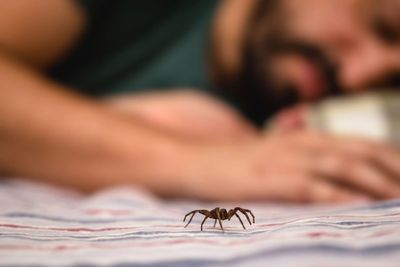
Understanding what draws spiders inside is the most important part of addressing a spider problem that keeps coming back. The main factors are straightforward.

Insects

Spiders eat insects. If there is a consistent insect population inside your home, whether flies, moths, silverfish, ants, or other small insects, spiders will follow. A home with significant spider activity almost always has an insect problem that is sustaining them, even if that insect problem is not obvious to the homeowner.

Light

Exterior lighting attracts flying insects, and flying insects attract spiders. Homes with bright exterior lighting near windows and entry points tend to see more spiders at those locations.

Clutter and undisturbed spaces

Spiders prefer areas that are rarely disturbed. Cardboard boxes, stored items in basement and garage areas, seldom-used closets, and spaces behind large furniture all provide ideal harborage for spiders and their egg sacs.

Moisture

Damp basements, crawl spaces with humidity issues, and areas with water damage attract the insects that spiders feed on, and certain species like cellar spiders actively prefer humid environments.

Entry points

Spiders enter through gaps around window frames, door sweeps that don't seal completely, foundation cracks, gaps around utility penetrations, and any other opening at or near ground level.

How Home-Tite Treats Spider Infestations

Inspection:

Inspection:

Inspection:

Every service starts with a free home and property inspection. I'll assess where spiders are nesting and active, identify the species, look for egg sacs in harborage areas, and importantly, identify what insect activity may be sustaining the spider population. You'll have a clear picture of what I found before any treatment begins.

Treatment:

Inspection:

Inspection:

Spider treatment at Home-Tite involves targeted residual insecticide application to active harborage areas, perimeter foundation treatment to create a barrier that kills spiders and insects on contact, and crack and crevice work around entry points and nesting areas. Egg sac removal from accessible areas is included where practical.

Underlying pest treatment:

Underlying pest treatment:

Underlying pest treatment:

If the inspection reveals an insect problem that is feeding the spider population, I'll address that as part of the treatment plan. Treating spiders without removing their food source produces short-term results at best.

Prevention guidance:

Underlying pest treatment:

Underlying pest treatment:

After treatment I'll walk you through the specific conditions in your home that are attracting spiders and what practical steps you can take to reduce them long-term.

Seasonal Spider Activity in Waterloo Region

Spider activity in Kitchener and Waterloo homes peaks at two distinct times of year, and knowing why helps you get ahead of it.


Late summer and early fall is the busiest season for spider calls. As temperatures begin to drop, spiders move indoors seeking warmth, and male spiders of many species are actively moving in search of mates, which is why they're suddenly visible in areas of the home where they weren't seen before. This is the most common time of year for wolf spider sightings inside homes.


Spring brings a secondary increase in activity as egg sacs that were laid in protected areas over winter begin hatching. Homeowners often notice a sudden appearance of large numbers of small spiders in basement areas and crawl spaces in April and May.


A perimeter treatment in late summer, before the fall migration begins, is one of the most effective ways to reduce the number of spiders entering the home each year.
Why Kitchener & Waterloo Homeowners Choose Home-Tite

16 years of experience

Same-day service available

Same-day service available

in the Waterloo Region — I know the pests, the housing types, and the conditions that drive infestations here

Same-day service available

Same-day service available

Same-day service available

spider problems don't wait, and neither should you

Discreet service

Same-day service available

Free inspection with every service

no logos, no uniforms, no company vehicles parked in front of your home

Free inspection with every service

Free inspection with every service

Free inspection with every service

you'll know exactly what you're dealing with before any treatment begins

3 to 6 month warranty

Free inspection with every service

3 to 6 month warranty

if spiders return during the warranty period, I come back

Multiple award winner

Free inspection with every service

3 to 6 month warranty

2024, 2025, 2026, and 2027 Consumer Choice Award for Best Pest Control in Waterloo Region

Service Area

                      Kitchener | Waterloo | Cambridge | Guelph | Stratford | Brantford | surrounding areas

Frequently Asked Questions

Please reach us at info.hometite@gmail.com if you cannot find an answer to your question.

The vast majority of spiders found in Waterloo Region homes are harmless to humans. The common house spider, cellar spider, wolf spider, and fishing spider are all non-venomous in any medically meaningful sense. The yellow sac spider can cause minor local irritation if it bites, but is not medically serious for most people. The one species in Ontario that poses a genuine health risk is the black widow, which is rare but occasionally found. If you are unsure what species you are dealing with, an inspection will give you a definitive answer.


A sudden increase in spider activity is almost always tied to one of two things: a seasonal shift (late summer into fall, when spiders move indoors before cold weather) or an increase in the insect population inside your home that is providing a food source. If spiders are consistently rebuilding webs after you remove them, something in the home is sustaining them.


Over-the-counter spider sprays kill spiders on contact but provide limited residual protection and do nothing to address egg sacs or the underlying insect activity that is attracting spiders. For a one-off spider in the house, a store-bought product may be sufficient. For a recurring or significant infestation, professional treatment using commercial-grade residual products applied to actual harborage areas produces much better and longer-lasting results.


The most effective steps are reducing exterior lighting that attracts insects, sealing gaps around windows, doors, and the foundation, reducing clutter in basement and storage areas, addressing any moisture issues in crawl spaces and basements, and scheduling a perimeter treatment in late summer before the fall migration begins. I'll give you specific recommendations based on what I observe in your home during the inspection.


Accessible webs and egg sacs in treated areas are removed where practical as part of the service. Removing webs also removes the sticky surface that catches prey and removing egg sacs before they hatch significantly reduces the next generation of spiders. I'll be clear about what is and isn't accessible during treatment in your specific home.


Late summer, before the fall migration begins, is the optimal time for a perimeter treatment. This reduces the number of spiders entering the home during peak season significantly. Spring treatment is also effective for addressing egg sacs before they hatch. For active infestations, the right time to treat is as soon as the problem is identified, regardless of season.


Book Your Spider Inspection Today

Whether you are dealing with a sudden influx of wolf spiders in the fall, persistent webs in your basement, or a spider you cannot identify and want assessed professionally, Home-Tite provides same-day service across Kitchener, Waterloo, Cambridge, and the surrounding region. Every service starts with a free home and property inspection.

Call us today!

Copyright © 2026 Home-Tite - All Rights Reserved

Powered by

  • Home
  • Pest Control
  • Blog
  • Wildlife Control
  • Whole Home Pest Proofing

Cookie Policy

This website uses cookies. By continuing to use this site, you accept our use of cookies.

DeclineAccept & Close

Welcome to my home-tite family

I'm Sheldon and I'm here to help!

Let's Chat

