Waterloo Kitchener Cambridge Stratford Brantford Guelph & Surrounding Areas
What Makes Bed Bugs Different From Every Other Pest
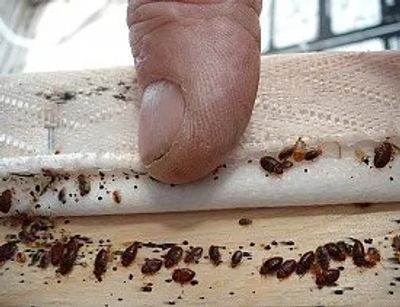
Every pest on this list is a problem. Bed bugs are in a different category entirely when it comes to the stress they cause and the complexity of treating them properly.
They feed on you while you sleep
Bed bugs are obligate blood feeders — humans are their primary host. They emerge at night, feed for three to ten minutes, and retreat back into their hiding spots before dawn. Many people sleep through bites entirely, which is one reason infestations often go undetected until they're well established.
They hide in places you'd never look
Bed bugs don't just live in mattresses. They establish themselves in mattress seams and box springs, bed frames and headboards, behind electrical outlet plates, inside furniture joints, along baseboards, behind picture frames, inside books stacked near a bed, and inside the seams of curtains. A thorough inspection requires knowing exactly where to look — which is not intuitive.
They're extraordinarily good at surviving
Bed bugs can survive for months without feeding. They're resistant to many pesticides. And they can detect certain chemicals and avoid treated areas, which is why the wrong treatment approach can scatter them and entrench the infestation deeper into a structure.
They spread fast in multi-unit buildings
Bed bugs move through shared wall voids, electrical conduits, and plumbing chases between units. An infestation that starts in one apartment can spread to neighbours within weeks, which is why treatment timing and thoroughness matter so much in attached housing.
They're the most expensive pest to treat incorrectly
A mishandled bed bug treatment — whether from DIY attempts or incomplete professional treatment — almost always results in a larger, more dispersed infestation that costs significantly more to resolve. This is not a pest to experiment with.
How Bed Bugs Are Spreading in Kitchener & Waterloo
Bed bug populations have been increasing across Ontario for years, and Waterloo Region is not immune. There are a few specific reasons why Kitchener and Waterloo see consistent bed bug pressure.
The region's university and college population creates a high volume of student housing turnover every September, which is historically the busiest season for bed bug calls. Furniture left on curbs at end-of-lease and items picked up second-hand are among the most common vectors for introducing bed bugs into a home.
The density of older apartment buildings in downtown Kitchener and Waterloo — buildings where unit-to-unit transmission through wall voids is structurally easy — means infestations in these properties tend to spread more quickly and require more coordinated treatment.
International travel and the volume of people moving through the region also contribute to ongoing introduction of bed bugs into hotels, short-term rentals, and then into homes.

How Home-Tite Treats Bed Bug Infestations

Effective bed bug treatment is methodical. It covers every harborage area, not just the visible surfaces, and it accounts for the full life cycle — including eggs that won't hatch until after the initial treatment. Here's how I approach it.
Inspection:
Every service starts with a thorough inspection of the affected rooms and any adjacent areas. I'll check every likely harborage location — mattress and box spring seams, bed frame joints, baseboards, furniture, electrical outlets, and surrounding areas — to establish the extent of the infestation before any treatment begins. You'll know exactly what I found and where before I do anything else.
Treatment:
Bed bug treatment at Home-Tite uses a combination of residual insecticide applications to harborage areas and crack and crevice treatments in all locations where bugs are present or likely to travel. Treatment is applied to every harborage point identified during the inspection — not just the mattress, not just the visible areas.
Follow Up:
Bed bug eggs are resistant to insecticide treatments, which means a second treatment spaced approximately two weeks after the first is typically necessary to catch newly hatched nymphs before they reach reproductive maturity. I'll be clear upfront about what your specific infestation requires and won't tell you it's resolved until it actually is.
Preparation guidance:
Effective bed bug treatment requires preparation from the homeowner before I arrive — laundering and bagging bedding, clearing access to baseboards and furniture, and a few other specific steps. I'll give you a clear, practical preparation checklist before your appointment so the treatment can be as effective as possible from day one.
What to Do and Not Do If You Think You Have Bed Bugs
This matters more with bed bugs than with any other pest.
Do:
- Call a professional as soon as you suspect an infestation
- Keep sleeping in your bed — counterintuitive as it feels, moving to another room or the couch spreads bed bugs to new areas of the home and makes the infestation harder to treat
- Bag and launder bedding on the highest heat setting dryers allow
- Document what you're seeing with photos
Do not:
- Apply over-the-counter sprays or foggers — these are largely ineffective on bed bugs and often scatter them into new areas
- Throw out your mattress or furniture before getting an inspection — this is almost never necessary with professional treatment and can spread bugs through your home and building as you remove items
- Move items out of the affected room and into other rooms — this is one of the fastest ways to spread an infestation
- Attempt to treat with essential oils, diatomaceous earth, or other home remedies as a primary approach — these are not effective treatments for an established infestation
The impulse to act immediately is understandable. The most useful immediate action is calling a professional, not treating the problem yourself.
Book Your Bed Bug Inspection Today

The sooner bed bugs are treated, the more contained the infestation and the more straightforward the resolution. If you're seeing signs of bed bugs — or even just waking up with unexplained bites — don't wait. Call Home-Tite today for same-day service in Kitchener, Waterloo, Cambridge, and the surrounding region. Every service starts with a thorough inspection so you know exactly what you're dealing with.
