Waterloo Kitchener Cambridge Stratford Brantford Guelph & Surrounding Areas
What You Need to Know About House Centipedes
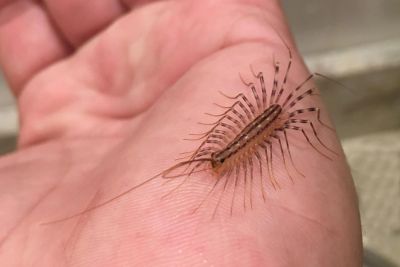
The centipede most commonly found inside homes in Waterloo Region is the house centipede (Scutigera coleoptrata). Here is what sets them apart from other household pests.
They are fast
House centipedes can move at roughly 40cm per second, which is why they seem to vanish the moment you spot them. Their speed is one of the main reasons people find them so unsettling.
They are predators
Centipedes do not eat your food, damage your structure, or contaminate your surfaces. They hunt and eat other insects, including cockroaches, silverfish, ants, moths, and flies. This sounds helpful in theory, but a centipede population inside your home means there is a sufficient insect food supply to support them. Centipedes do not thrive in homes that do not have other pest activity.
They prefer moisture
House centipedes need humid environments to survive. They dehydrate quickly in dry conditions, which is why they are almost always found in bathrooms, basements, crawl spaces, laundry rooms, and other damp areas of the home.
They can bite
House centipedes are venomous, as all centipedes are, but their venom is not medically significant to healthy adults. A bite from a house centipede is roughly comparable to a bee sting and is most likely to occur if the centipede is handled or trapped against skin. For most people, a bite causes brief local pain and redness that resolves on its own.
They reproduce indoors
A centipede that has found a suitable humid environment with a reliable food supply will lay eggs and establish a population. What starts as occasional sightings in the basement can become a consistent presence throughout the home over time
Why Centipedes Are in Your Home
This is the most important thing to understand about a centipede problem: centipedes do not move into homes randomly. They are following food and moisture. If you are seeing centipedes consistently, your home has two things working in their favour.
An insect population. Centipedes eat other insects. A home with regular centipede sightings almost always has an underlying population of silverfish, cockroaches, ants, flies, or other small insects that the centipedes are feeding on. In many cases, the insect problem is hidden inside walls, under flooring, or in basement areas where the homeowner hasn't looked. The centipedes are often the first visible sign that something else is going on.
A moisture problem. House centipedes cannot survive in dry environments. Damp basements, crawl spaces with inadequate vapour barriers, plumbing leaks under sinks or behind walls, poor ventilation in bathrooms, and condensation around basement windows all create the conditions centipedes need to thrive. Without addressing moisture, centipede treatments produce limited long-term results.
Treating centipedes without identifying and addressing both of these factors is the primary reason centipede problems keep coming back after treatment.
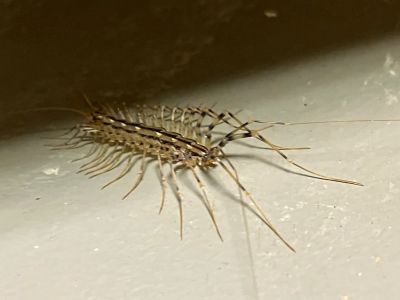
Signs You Have a Centipede Problem
A single centipede sighting does not necessarily mean an infestation, but certain patterns do.
- Centipedes appearing regularly in bathrooms, basements, or laundry rooms, rather than as an isolated sighting
- Sightings happening in multiple areas of the home, not just one room
- Centipedes appearing during the day, rather than only at night when they are naturally more active
- Finding centipedes in upper floors of the home, which suggests the population has grown large enough to expand beyond the basement
- Noticing a sudden increase in centipede sightings in fall as temperatures drop and they move deeper indoors
- Finding shed skins or egg clusters in basement corners, crawl spaces, or behind stored items
If centipedes are appearing with any regularity, an inspection is worthwhile to identify what is sustaining them.
-1977000.jpeg/:/rs=w:400,cg:true,m)
Preventing Centipedes from Coming Back
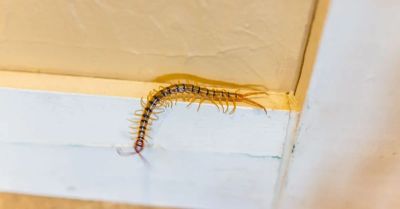
Treatment addresses the current population and the conditions sustaining it. These steps will reduce the likelihood of centipedes re-establishing over time.
Reduce basement moisture
A dehumidifier in the basement is one of the single most effective things a homeowner can do to make the environment inhospitable to centipedes and the insects they feed on. Aim to keep basement relative humidity below 50 percent.
Fix plumbing leaks
Dripping pipes under sinks and around basement plumbing are a consistent moisture source. Even small drips create the humid microenvironments that centipedes prefer.
Seal entry points
Gaps around utility penetrations at the foundation, cracks in basement walls, and spaces under exterior doors are all common entry points. Sealing them reduces the access centipedes and their prey have to your home.
Reduce outdoor harborage near the foundation
Leaf litter, mulch beds, stacked firewood, and dense ground cover against the foundation provide ideal outdoor habitat for centipedes and the insects they eat. Moving these away from the foundation reduces pressure on the perimeter.
Address underlying insect activity
If silverfish, cockroaches, or ants are present in the home, treating those populations removes the food source that is sustaining the centipedes.
Book Your Centipede Inspection Today

If centipedes are appearing regularly in your home, something in your home is drawing them in. Call Home-Tite today for same-day service in Kitchener, Waterloo, Cambridge, and the surrounding region. Every service starts with a free home and property inspection so you know exactly what is driving the problem before treatment begins.
